05 August 2026
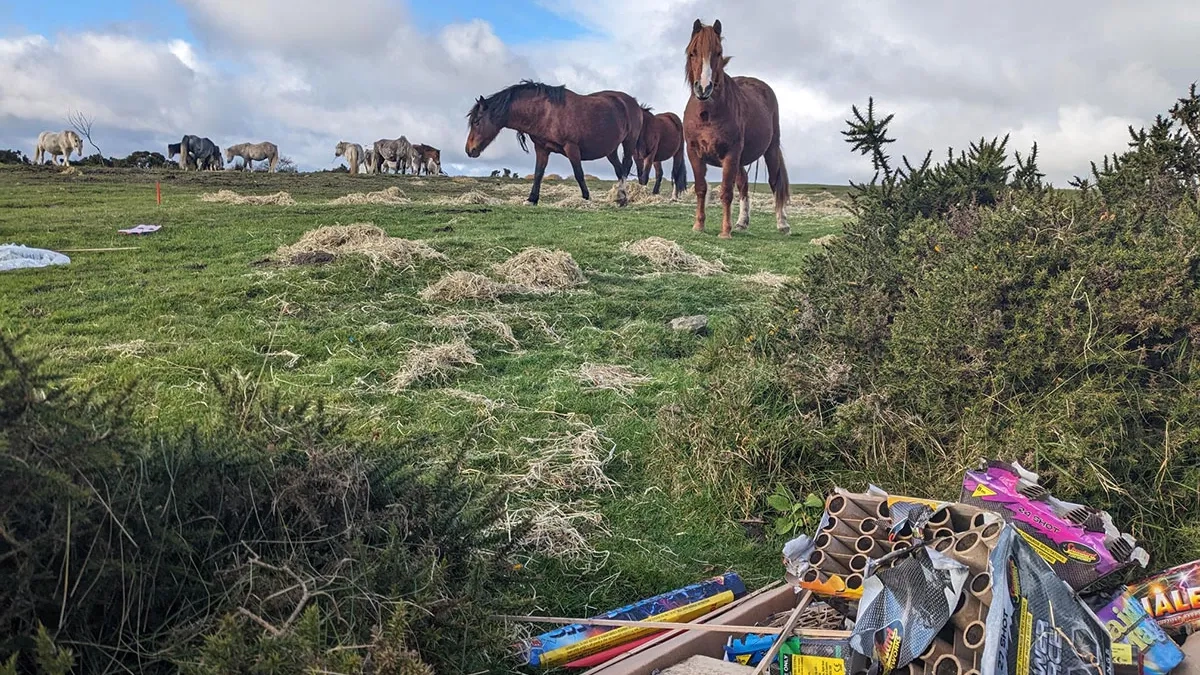
On July 16th the UK Government launched a 12-week public consultation to seek people’s views on proposed changes to fireworks regulations. Anyone can take part by using the online form which is available HERE until Wednesday 7th October 2026.
The fact that the Government is proposing changes to fireworks regulations is the result of pressure from individuals, organisations, public bodies and MPs. Whether you signed a petition, wrote to your MP or shared content online, YOU have contributed to this important progress. Thank you for all your support.
The consultation has been launched by the Office for Product Safety and Standards (OPSS). The OPSS is part of the Department for Business and Trade which holds responsibility for fireworks regulations.
Taking time to read the information on the consultation webpages will be useful. There is more detailed information on the proposals, current regulations and reasons the consultation has been launched. This includes reference to that fact that some parts of fireworks regulation are devolved in Northern Ireland and Scotland, but that this consultation is looking at potential changes that would apply to the whole of the UK.
You don’t need to answer all the questions. Some questions are more technical and outside the scope of what Redwings and others are campaigning on. Redwings won’t be responding to every question. It’s absolutely fine to select ‘neither agree nor disagree’ or to leave a question blank.
Your own experiences of fireworks are vital as they provide important insights for policy makers and explain the reasons behind regulatory changes you would like to see, as well as making the issue real and tangible.
If the questions don’t directly cover aspects of fireworks regulation you think are important, feel free to raise those points as an extension to one of your answers.
We have outlined some thoughts that you may find useful when responding to some of the consultation questions:
>> Question 1. Are there any other particular F2 and F3 fireworks products that you think the general public should not be allowed to buy? Please state which products and give your reasons.
There are four categories of firework:
F1. The lowest hazard of firework, suitable for indoor use and close proximity use. Products include party poppers, ice fountains and many sparklers.
F2. Fireworks for outdoor use only and requiring spectators to stand at least 8 metres from where the firework is launched. Noise limit 120 decibels.
F3. Larger fireworks requiring spectators to stand at least 25 metres from where the firework is launched. Noise limit 120 decibels.
F4. Fireworks only suitable for use by trained professionals. No maximum noise limit.
Although this question asks about restricting specific products, you may want to use your answer to express support for more widespread limits on consumer fireworks such as removing F3 from public sale or limiting all fireworks other than those in the F1 category to professional displays.
You may also want to make other suggestions such as raising the age limit at which the public can buy fireworks, introducing an approval process for people choosing to buy certain fireworks or limiting the times of year that fireworks can be used.
The safety distances for both F2 and F3 fireworks are the minimum requirements. Many UK properties would be unable to meet the most basic safety requirements for F3 products and many smaller gardens wouldn’t even be safe for an F2 display.
>> Question 2. If more products are added to the regulation 33 banned list, what consequences might there be for consumers, industry, enforcement authorities, professional users, and others? Please give your reasons.
Depending on which fireworks you have suggested should be removed from sale to the public in Question 1, here you can outline the benefits you think those changes would bring.
This can include referencing your own experiences of fireworks and how tighter regulation would benefit you, your animals and people you care about.
Redwings focusses on the impact fireworks can have on horses but we know that the unwanted and sometimes devastating effects of fireworks are far wider. As members of the Fireworks Impact Coalition, we work alongside charities representing many other animals and people who all want to see more protections from fireworks.
In addition to horse welfare, considerations you may want to refer to in your submission could include:
· Other pets, livestock and wildlife
· Vulnerable people including young children, the elderly, military veterans and people living with PTSD, those who rely on assistance dogs and people with sensory conditions such as autism.
· The environment, air pollution and wildfire risks
· Antisocial use of fireworks
· Impacts on the emergency services and the NHS
It is important to remember that many people enjoy fireworks and it provides a livelihood for retailers and professional display organisers. You may want to refer to ways that consumers and businesses can adapt to embrace a change in our relationship with fireworks and continue to bring economic benefits, such as through more use of drone shows and light displays.
>> Question 6. Do you agree the decibel level of fireworks consumers use should be lowered? Choose one of the following options:
No, the maximum noise limit for fireworks should remain at 120 dB (A,imp)
Yes, to 110 dB (A,imp) (reducing perceived loudness by approximately half)
Yes, to 100 dB (A,imp) (reducing perceived loudness by approximately three-quarters)
Yes, to 90 dB (A,imp) (reducing perceived loudness by approximately seven-eights)
Don’t know
Redwings’ recent petition asked for the maximum noise level of consumer fireworks to be reduced from 120 to 90 decibels.
The OPSS is proposing to halve the decibel level of consumer fireworks by reducing the limit from 120dB to 110dB. The decibel scale is ‘logarithmic’ rather than ‘linear’ which means that every reduction of 10 decibels effectively halves the perceived sound.
This means that a 90-decibel firework would be around an eighth as loud as a 120-decibel firework, so is a very significant reduction.
Below are some reasons you may choose to offer in support of the 90dB option:
· Fireworks retailers generally describe low-noise fireworks as those creating sounds of around 70 – 90 decibels. Many already stock good ranges of low-noise fireworks and promote their ability to provide brilliant colour and spectacle without excessive noise.
· Many animals have more sensitive hearing than a human. For example, the conical shape of horses’ ears is thought to increase perception of sound by around 10 – 20 decibels. They can also hear sounds at higher frequencies, picking up on noises that humans aren’t aware of at all.
· The government’s own guidance states that ‘fireworks must not be set off close to livestock or horses…’ (see HERE (PDF 1.1 MB)) but without a definition of what ‘close to’ means. Without a clear and enforceable distance requirement, a lower noise limit is essential to reduce the risks from nearby fireworks.
· A noise limit of 90 decibels has been in place in New Zealand since 2008, providing a practical example that the UK can learn from.
· Tighter restrictions, such as limiting fireworks to organised public displays only, would be welcomed by many individuals and organisations. If this step is not being considered, any reduction in noise levels should be significant to maximise the benefits a regulatory update will achieve.
You may also want to suggest that in addition to a reduction in the noise limit for consumer fireworks, you would like to see F4 fireworks for professional displays subject to a maximum noise level of 120 decibels (there is currently no noise limit).
You may find useful information and evidence to mention in your consultation response through the document links below. Note that you cannot add links as part of your response so any relevant information must be outlined in your text. You can make reference to documents in support of your statements using phrases such as: ‘Redwings surveyed more than 5,000 UK horse owners and found that more than 90% said fireworks are let off close to where they keep their horse.’
Redwings Fireworks and Horses report (PDF 781 KB)
And below are some more general tips to help you respond:
Government consultations are a vital part of the democratic process used to seek views on introducing or updating policies and how they are implemented and enforced.
Even if you have never responded to a consultation before, don’t worry! Below are some tips that may help you respond to the consultation with confidence. Remember that your views and experiences count and really will make a difference!
Have you experienced frustration when raising concerns about a fireworks incident through an appropriate channel such as your local council, the police or with your MP? This can be useful additional information for the consultation as it can demonstrate that existing measures for mitigating the impact of fireworks are insufficient.
Outlining your experiences and perspectives in your own words is likely to be the most impactful way of responding to the consultation but we know some people may wish to use AI to help with a submission. If you do use AI, it’s important that you review and edit any suggested wording to make sure it’s accurate and reflects your actual experience and views.
Remember to ensure the response is concise and don’t include any references to other sources of information you haven’t checked, understood and confirmed to be accurate (your own experiences and perspectives are likely to be more important anyway).
Thank you for taking part in this important consultation. It is a major milestone on the road to improved regulations and far better protection of horses, other animals, vulnerable people and wildlife.